eStar Velocity
Back-to-School E-Bike Safety Checklist

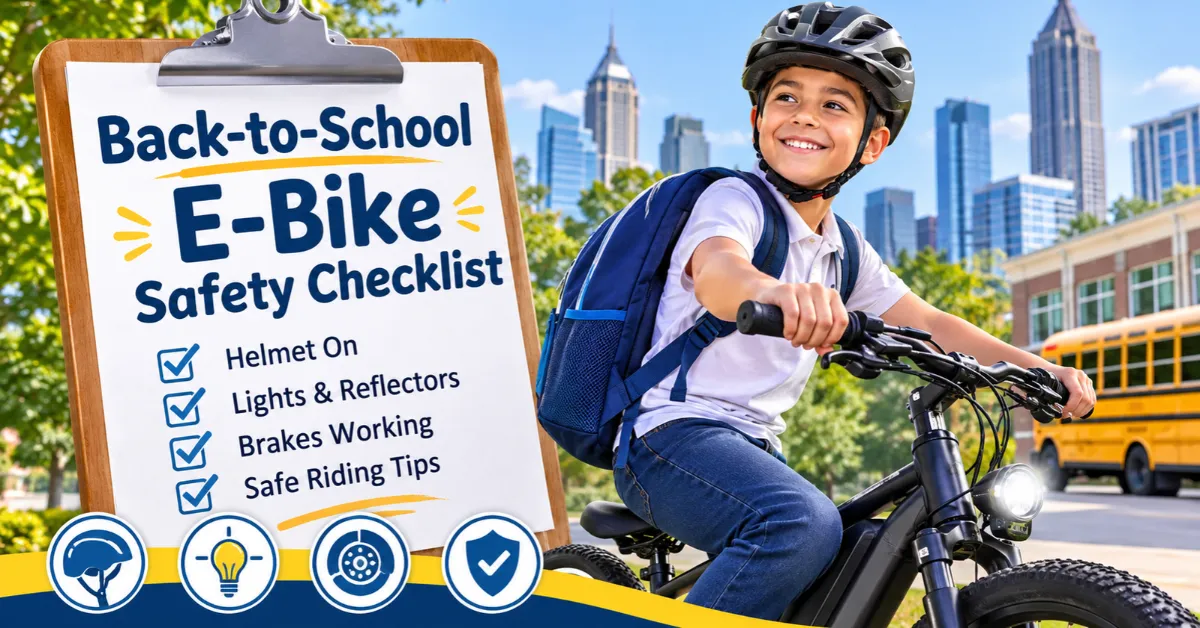
Riding to class in Atlanta? Before you roll out, check your E-Bike tires, squeeze both brakes, and make sure your lights work. Before the semester starts, ride your route in daylight and find out where your campus lets you park, store, and charge your e-bike.
Your Back-to-School E-Bike Safety Checklist
Use these two quick checklists to prepare for everyday rides and the start of the semester.
Before Every Ride
- Helmet: Wear a properly fitted bicycle helmet with the chin strap fastened.
- Tires: Check tire pressure and look for cuts, punctures, or visible damage.
- Brakes: With the bike powered off, walk it forward and squeeze each brake lever separately. Each brake should stop the bike.
- Chain and controls: Check the chain, handlebars, pedals, display, and controls for visible damage or looseness.
- Lights: Check your front light and rear light or approved reflector.
- Cargo: Secure your backpack or other items so they cannot interfere with steering or the wheels.
Before the Semester
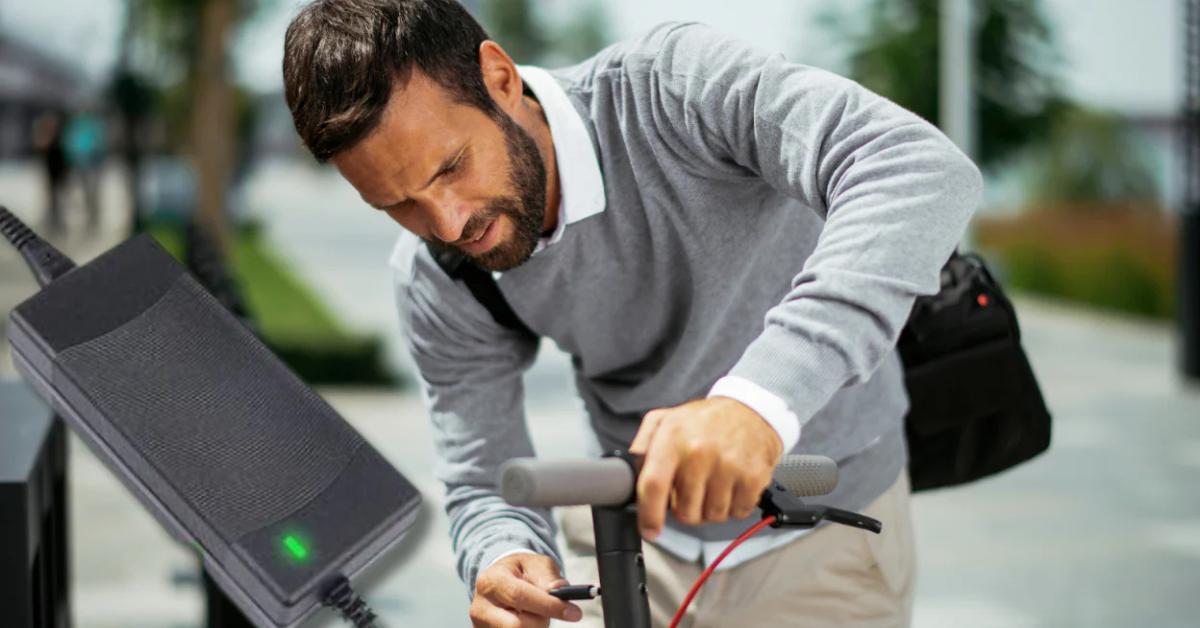
- Battery and charger: Inspect the battery, charging port, cables, and approved charger for damage.
- Campus route: Ride your planned route in daylight and identify busy intersections, steep areas, and safer alternatives.
- Parking and storage: Check your college’s rules for bicycle parking, indoor storage, and battery removal.
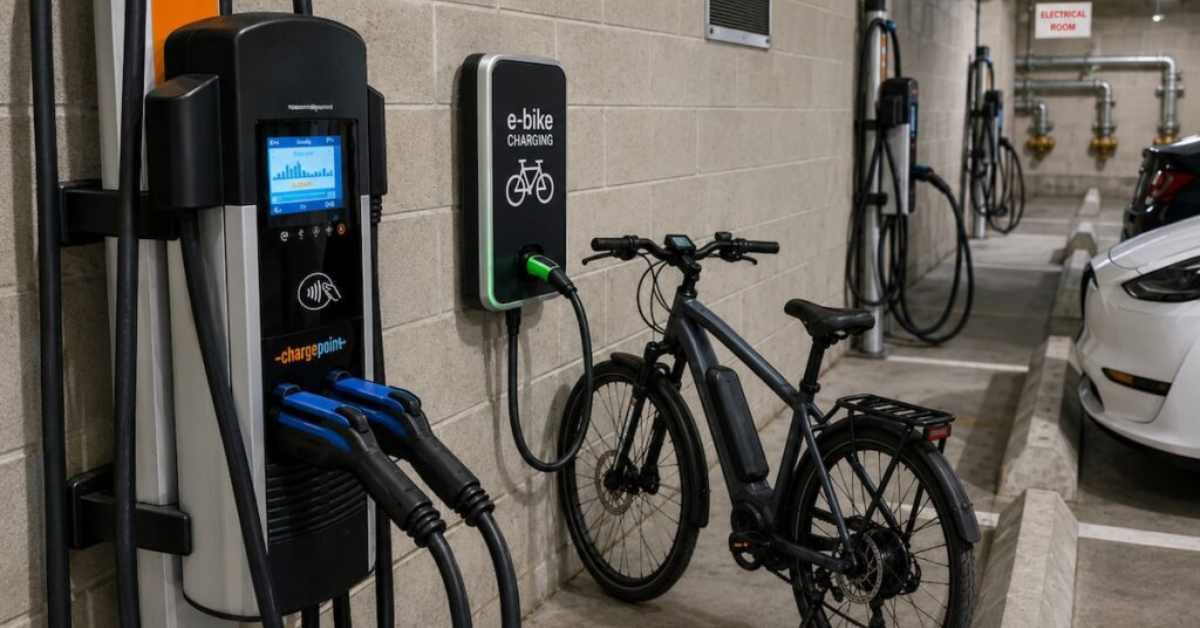
- Charging rules: Find out whether and where e-bike batteries can be charged on campus.
- Repairs: Arrange service for any brake, tire, battery, motor, or electrical problem before relying on the bike for daily transportation.
Keep reading for practical ways to complete these checks and prepare for Atlanta’s roads and campus environments.
1. Check Your Helmet and Essential Gear
A properly fitted helmet is one of the most important pieces of equipment for an e-bike rider. Even a short trip to class can involve unexpected traffic, road hazards, or sudden stops.
When choosing a helmet, look for a label showing the helmet meets the U.S. CPSC bicycle helmet standard. Make sure it sits level on your head, covers your forehead, and has straps adjusted securely.
Check your helmet fit:
- The side straps should form a V shape around your ears.
- The chin strap should fit snugly, allowing no more than two fingers underneath.
- The helmet should not rock forward, backward, or from side to side.
- Check the shell, straps, and fastening system for damage.
- Replace a helmet after a crash if it has sustained an impact.
Georgia requires bicycle helmets for riders and passengers under 16 on covered public roads, bicycle paths, bicycle lanes, and sidewalks. Class 3 e-bike operators and passengers must wear helmets regardless of age. Riders must be at least 15 years old to operate a Class 3 e-bike.
For additional comfort and protection, consider wearing closed-toe shoes and reflective clothing, particularly when commuting in low-light conditions.
2. Complete a Pre-Ride E-Bike Inspection
A quick inspection can help identify problems before they interrupt your commute. Use the ABC framework to remember the main mechanical checks.
A — Air: Check Your Tires
Proper tire pressure helps your e-bike handle predictably and maintain traction.
- Check tire pressure against the manufacturer’s recommended range.
- Look for cuts, cracks, punctures, or embedded debris.
- Check the tread for excessive wear.
- Make sure both wheels are seated correctly.
- Inspect valve stems for damage or leaks.
Underinflated or damaged tires can affect handling and make the bike harder to control. If a tire repeatedly loses air, have it inspected rather than continually topping it up.
B — Brakes: Test Before Riding
Your brakes need to respond smoothly and consistently, especially when riding through busy Atlanta streets.
- With the bike powered off, walk it forward and squeeze each brake lever separately.
- Check that each brake stops the bike without excessive lever travel.
- Listen for unusual grinding or rubbing noises.
- Inspect brake pads for visible wear.
- Look for loose components or visible fluid leaks on hydraulic systems.
If the brakes feel weak, make unusual noises, or fail to stop the bike properly, don’t ride until the problem has been inspected.
C — Chain and Controls: Check the Moving Parts
A loose chain, damaged cable, or faulty control can affect how your e-bike responds.
- Check that the chain is properly seated and lubricated, where applicable.
- Inspect the pedals and crank arms for looseness.
- Check the handlebars and seat for movement.
- Test the display and control buttons.
- Make sure the throttle and pedal-assist system respond normally.
- Listen for unusual motor noises.
Also check the frame, folding mechanism if equipped, and visible bolts for damage or looseness.
3. Check Your Battery and Charging Equipment
Battery problems can interrupt a student’s commute, but damaged lithium-ion batteries and charging equipment can also create serious safety risks.
Before the semester begins, inspect the battery casing, charging port, connectors, and cables. Look for cracks, swelling, corrosion, frayed wires, or other visible damage. Make sure the battery locks securely into its mounting position.
Follow these charging precautions:
- Use the charger supplied by the manufacturer or one specifically approved for your e-bike.
- Charge in a dry, well-ventilated area.
- Stay present and awake while charging.
- Keep the battery and charger away from excessive heat and moisture.
- Keep exits and escape routes clear of charging equipment.
- Follow the manufacturer’s instructions for charging and storage.
If the battery is swollen, damaged, or unusually hot, stop using and charging it. Contact the manufacturer for guidance before handling or transporting it.
If the battery smokes or catches fire, get outside and call 911 from a safe location. Do not try to handle or move a smoking or burning battery.
If your battery loses power unusually quickly, the display shows an error, or the motor cuts out unexpectedly, have the electrical system checked. The problem may involve the battery, charger, wiring, controller, or another component.
4. Make Sure Your Lights and Reflectors Work
Students may travel early in the morning or return from evening classes. Visibility matters when sharing roads with cars, buses, and other cyclists.
Georgia law requires a bicycle used at night to have a white front light visible from 300 feet and a red rear light visible from 300 feet. The rear-light requirement has an exception for a red rear reflector approved by the Georgia Department of Public Safety.
Before riding at night, check that your front light works, your rear light or approved reflector is in place, and your lights have enough power for the entire trip.
Don’t assume vehicle headlights or streetlights will make you visible. Wear reflective clothing and use your lights whenever visibility is reduced.
5. Plan for Atlanta Traffic, Rain, and Campus Routes
A safe commute starts before you leave home. Atlanta routes can include busy intersections, turning vehicles, parked cars, pedestrians, uneven pavement, and changing weather.
Before the semester begins, ride your planned route in daylight. Look for lower-traffic streets, designated cycling routes, steep hills, construction, and places where you may need to slow down or dismount. Allow extra travel time so you aren’t rushing to class.
Rain can make familiar routes more challenging. Wet pavement, painted road markings, metal covers, leaves, and standing water can reduce traction. When conditions are wet:
- Slow down and allow extra stopping distance.
- Avoid sudden braking and sharp turns.
- Use working lights when visibility is reduced.
- Wear weather-appropriate clothing.
- Avoid deep water and conditions beyond the manufacturer’s stated limits.
- Dry your bike after wet rides, following the manufacturer’s care instructions.
If water has entered the battery or electrical system, or the bike has been submerged, stop using it until it has been inspected.
Understand Georgia’s E-Bike Path Rules
Georgia distinguishes between Class 1, Class 2, and Class 3 electric-assisted bicycles.
Class 1 and Class 2 e-bikes may generally use bicycle paths and shared-use paths where bicycles are permitted. However, a local authority or state agency can prohibit them on paths under its jurisdiction.
Class 3 e-bikes have a more limited rule: they may use a bicycle path or shared-use path only if it is within or adjacent to a highway, or if the authority responsible for the path permits their use.
There is a separate provision for designated nonmotorized paths with a natural-surface tread made by clearing and grading native soil without added surface materials. The authority managing those trails may regulate which devices are allowed.
These rules are set out in Georgia Code § 40-6-303. Always check local signs and the rules of the agency managing the route before riding.
Check Your College’s Parking and Storage Rules
Campus policies can affect where you leave your e-bike and whether you can store or charge its battery.
For example, Georgia Tech’s housing transportation guidance describes bicycle storage rooms and racks near residence halls, and explains restrictions on where bicycles and electric vehicles may be parked.
Check your own school’s current rules for bicycle parking, indoor storage, battery removal, and charging. Don’t assume that a bicycle storage room or charging location is available to every type of electric vehicle.
6. Carry School Essentials Safely
Students often carry laptops, books, chargers, and water bottles. Carrying these items incorrectly can affect balance and control.
Use a properly secured backpack or a compatible bike rack or pannier.
- Keep heavy items low and evenly distributed.
- Secure bags so they cannot move into the wheels.
- Keep straps and loose clothing away from moving parts.
- Stay within the bike’s manufacturer-specified weight limit.
- Make sure your backpack doesn’t restrict your movement or visibility.
Never carry a package or bag in a way that prevents you from keeping at least one hand on the handlebars. If you use a removable battery, take it with you only if campus storage rules allow it and the manufacturer permits safe removal.
7. Secure Your E-Bike on Campus
A safe commute doesn’t end when you arrive at class. Students should also protect their bikes against theft and unauthorized use.
Before the semester starts, find out where your campus allows bicycle parking and whether secure storage is available.
Use a quality U-lock or suitable secondary lock to secure the frame and a wheel to a fixed bicycle rack. Remove easily detachable accessories when leaving the bike, and keep a record of its serial number and purchase information. A compatible GPS tracker can provide an additional layer of security.
Never block building entrances, accessible routes, emergency exits, or pedestrian walkways when parking.
For more ways to protect your bike during the school year, read eStar Rides’ guide to preventing e-bike and scooter theft.
8. Know When to Stop Riding
A quick pre-ride check can catch visible problems, but some mechanical and electrical issues need professional attention.
Stop riding and arrange an inspection if you notice:
- Brakes that feel weak or inconsistent.
- Tires that repeatedly lose pressure.
- Unusual motor noises or sudden power loss.
- A battery that won’t charge.
- Error codes on the display.
- Loose handlebars, pedals, or wheel components.
- Damaged wiring, connectors, or charging ports.
- A frame or wheel that may have been damaged in a crash.
Don’t keep riding to see whether a serious problem goes away. If the bike cannot be controlled or stopped safely, stop using it until the issue has been checked.
eStar Rides offers electric bike repair and diagnostic services in Atlanta, including brake service, tire and tube work, battery diagnostics, motor and controller troubleshooting, and electrical inspections.
Get Your E-Bike Ready for Next Semester
Brakes feel weak? Tire keeps losing air? Motor cuts out on the way to class? Schedule a repair with eStar Rides before your next commute.
If you’re still picking a bike for school, book a free test ride and tell us what your route looks like.